
PUBLIC HEALTHCARE IN NORTH ALSACE
From opening a beggars’ refuge… to the Maison de la Santé de Hoerdt
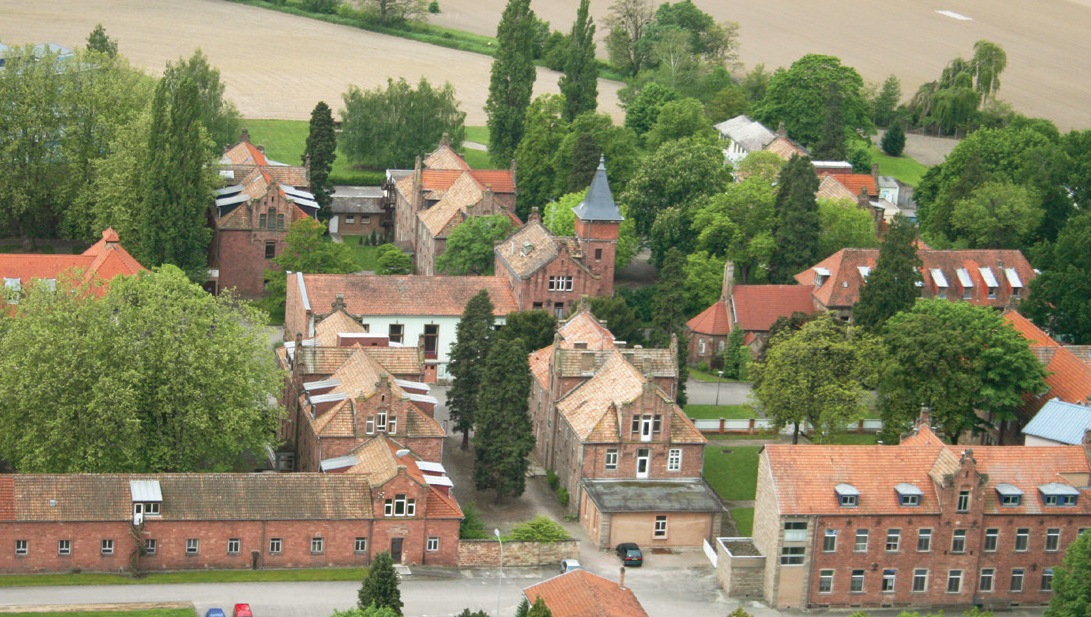
Following a prefectural decree that prohibited begging, an establishment for “the detention of beggars” opened its doors in 1861 in Hoerdt. Functioning half way between a hospice and a prison, the beggars’ refuge was constructed around central buildings housing the administration and the refectory. It comprised isolated lodges that could each accommodate 50 people.
The place had very strict rules, including the observation of silence. Severe disciplinary measures reinforced the punitive nature of the site. Compulsory work shaped the lives of residents who, for good conduct, were granted a few rare outings.
After the German annexation, the beggars’ refuge became an asylum for the insane in 1878. In 1912, a “fortified manor house” was added to the property : this was used to accommodate dangerous criminals and insane people. Under the Treaty of Versailles, the site became the property of the French State again in 1919; it was renamed the Maison de la Santé de Hoerdt (the Hoerdt sanatorium).
From restructuring to redevelopment : an uncertain future
A comprehensive expansion of the site was carried out in 1929. The various lodges then became more specialized. However, the ward for people with serious mental illnesses closed in 1963 in favour of more suitable psychiatric hospitals.
Modern comfort gradually emerged, improving the overall quality of life of residents. New equipment helped
transform and improve how the facility operated. Outpatient consultations were expanding. Little by little, the modern era witnessed the rise of crosssectoral psychiatry with the care of non-residential patients.
Despite numerous restructurings, the psychiatry department was transferred in 2007 to the Établissement Public de Santé d’Alsace Nord de Brumath (North Alsace public health service in Brumath). The institution closed its doors permanently in 2014.